Strategy, content and community management that build an audience instead of just filling a calendar - for Austin businesses and beyond.
Social is where a lot of people now discover, research and judge businesses. It also acts as proof of life - a prospect who likes your website often checks your profiles, and an abandoned feed raises doubts a good site cannot fully answer.
Organic social also lowers the cost of everything else. Audiences who already recognise you click more, convert better and cost less to reach with advertising. And unlike ads, good content keeps working long after it is published.
The reason most accounts underperform is inconsistency. Posting stops whenever things get busy, the voice shifts depending on who is posting, and the content is about the company rather than useful to the audience. Fixing that is mostly a matter of system and discipline.
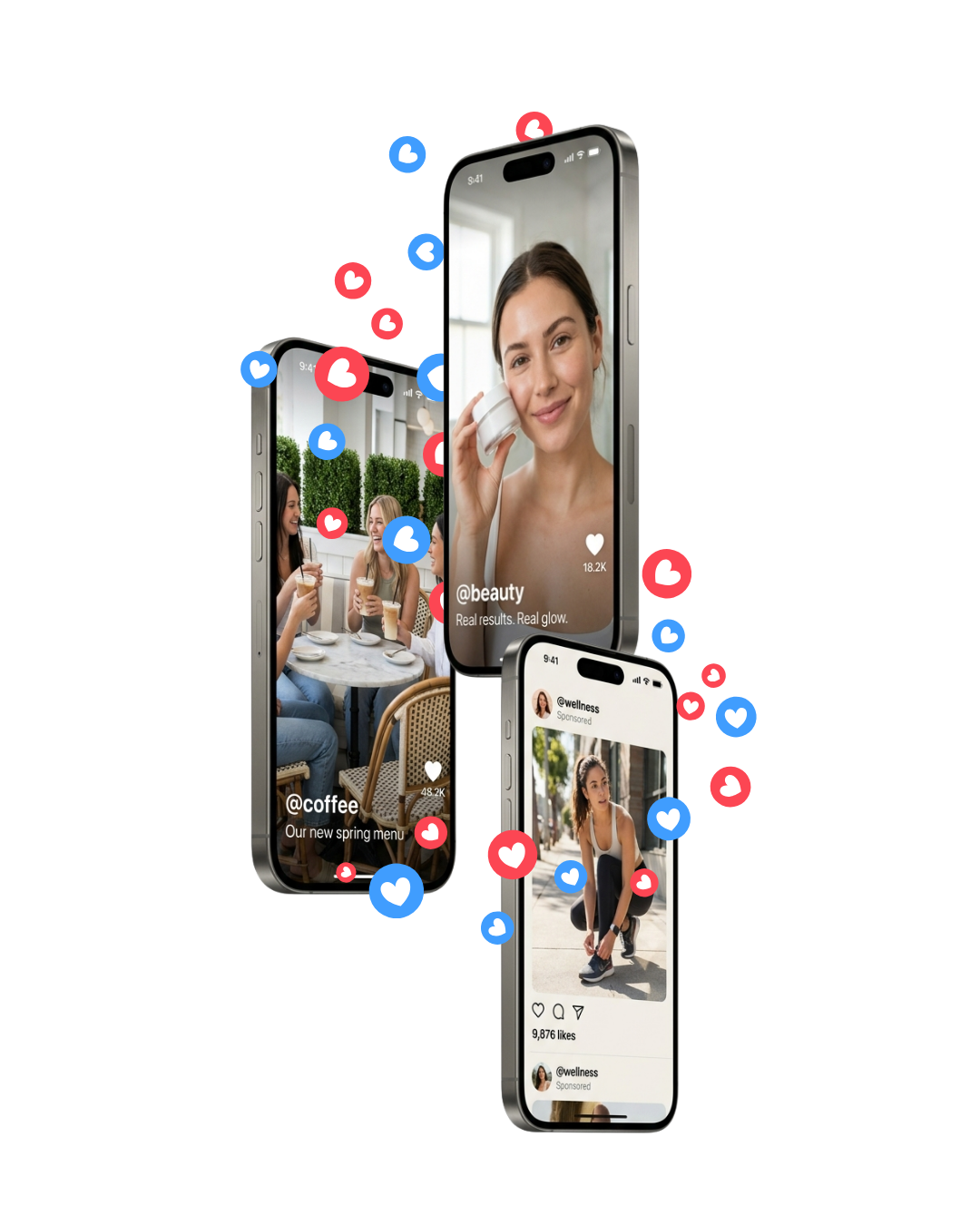
These get used interchangeably and they aren't the same purchase. Knowing which one you're buying is the difference between a feed that looks busy and a feed that does something.
Management is the operational half. Someone owns the calendar, produces and schedules the posts, answers comments and messages, and keeps the accounts alive on a predictable cadence. It's a capacity problem, and the measure of success is that it keeps happening.
Marketing is the strategic half. Which platforms are worth your time, what the content is supposed to achieve, how it ties to the rest of your funnel, and what you stop doing. It's a judgment problem, and the measure of success is that the audience grows into customers.
Most Austin businesses asking for one need both, and most agencies sell management while calling it marketing. We'd rather be clear: if you have the strategy and need hands, say so and we'll scope the management. If the accounts are running and going nowhere, that's a strategy problem and more posting won't fix it.
Worth saying plainly
Platforms aren't interchangeable surfaces for the same post. Each one rewards a different thing, and the mistake we see most often is one piece of content cross-posted four ways and underperforming everywhere.
Still the default for consumer brands, and increasingly the place people check to decide whether you're real. Reels carry reach, the grid carries credibility, and Stories carry the day-to-day that keeps an existing audience warm. For local businesses the location tag and a complete profile matter more than people expect - it's a discovery surface, not just a gallery.
The only platform where B2B attention is reliably available, and the one most businesses treat as a press release channel. What performs is a named person with a point of view, not a company page announcing things. If you're selling to other businesses in Austin, this is usually the first platform we'd fund and the one we'd push you to put a face on.
Reach is still cheaper here than anywhere else, and the trade is that the content has to be genuinely native. Production value matters less than the first two seconds. It's a poor fit if nobody on your team will appear on camera, and we'll tell you that rather than take the budget.
Easy to dismiss and often wrong to. For a lot of Austin service businesses it's where the local groups, the neighbourhood recommendations and the older end of the customer base still live. Low effort to maintain alongside Instagram, and worth keeping accurate even if it isn't where you invest creative energy.
Which of these we'd recommend depends entirely on who buys from you. We'd rather argue you out of a platform than staff one that was never going to work.
Austin rewards specificity on social more than most markets, for a simple reason: a large share of the audience moved here recently and is actively working out where to go and who to trust. Content that reads as locally rooted gets a hearing that generic content doesn't.
What that looks like in practice:
Social reporting is where agencies hide. Follower counts and impressions always go up given enough posting, which makes them useless for deciding anything.
What we report on:
What we don't lead with: follower growth, impressions, and engagement rate as a single blended number. We'll include them, because you'll be asked about them, but they don't drive what we make next.
And we'll say when it isn't working. Organic social on a sensible budget takes two to three months before the content mix is tuned and longer before an audience is worth anything. If month four looks like month one, the honest conversation is whether the channel suits your business at all.
We decide which platforms are worth your effort based on where your customers actually are, and what role each one plays. Being good on two beats being mediocre on five.
We build a calendar around themes your audience cares about, then produce the posts - copy, graphics and video - on a reliable cadence rather than in bursts.
We schedule and publish, then engage - replying to comments and messages in your voice, because the conversation is where followers turn into customers.
We report on what is growing and what is landing, and shift the content mix toward what works instead of repeating a plan that is not performing.
Wherever your customers are and you can sustain quality. For most B2B that is LinkedIn, for consumer brands Instagram and TikTok. We will recommend rather than default to all of them.
Consistency matters more than frequency. A sustainable two to three quality posts a week beats daily posting that collapses after a month.
Yes, community management is part of the service. We reply in your voice and escalate anything sensitive to you rather than guessing.
Management is the operational half - calendar, production, scheduling and replying. Marketing is the strategic half - which platforms are worth your effort, what the content is for, and how it connects to the rest of your funnel. Most businesses need both, and we'll scope either on its own if that's what you're actually missing.
Two to three months before the content mix is tuned, and longer before the audience is worth anything commercially. If you need enquiries this month, paid social or search ads are the honest answer and we'll say so.
For TikTok and to some extent Instagram, realistically yes - faces outperform graphics on both. If nobody on your team will do it, we'd steer the budget to platforms where that isn't the deciding factor rather than pretend otherwise.
Tell us what you're working on and we'll come back with a straight answer on whether we can help.
Start a project → Digital Marketing Agency